Showing posts with label stiinte si tehnologii. Show all posts

Friday, May 8, 2015

Dr. Adrian Adascăliței, expert în tehnologii e-Learning și software educațional


(In ENG) Dr. Adascăliței is the author (and coauthor) of 5 textbooks on electrical engineering subjects, elearning, and information systems. He has also published technical papers in research areas e-Learning, computer-aided communication, computer aided electrical engineering education, and electromagnetic compatibility.


În domeniul e-Learning a participat la diverse proiecte de cercetare-dezvoltare, și ca un pionier al acestui domeniu, s-a preocupat de promovarea și utilizarea platformelor LMS (Learning Management System) în istruirea inițială și cea continuă. În acest domeniu a publicat mai multe articole științifice, iar în anul 2007 o carte la Editura Polirom din Iași "Instruire Asistată de Calculator. Didactică Informatică", inclusă în bibliografia pentru examenele de definitivat și grad (profesori de liceu,
ingineri și economiști), recomandată de Ministerul Educației (A. Adăscăliţei, Instruire asistată de calculator–Didactică Informatică, Editura Polirom, Iaşi, 2007, ISBN: 978-973-46-0687-0, 208 pag.).

Utilizarea platformei Moodle în instruire, cursuri la Universitatea Tehnică " Gh. Asachi" din Iași” (http://moodle.ee.tuiasi.ro/), Facultatea de Inginerie Electrică, Energetică şi Informatică:
  • Instruire Asistată de Calculator; Curs IAC folosind Platforma Moodle pentru DIDATEC: DidaTec Blended Learning şi e-Learning; 
  • Teoria Circuitelor Electrice I (Curs, Seminar, Laborator); 
  • Teoria Circuitelor Electrice II (Curs, Seminar, Laborator).
Adrian Adăscăliței este membru în comitetele științifice ale unor conferințe naționale și internaționale: SOIC-Social and Organizational Informatics and Cybernetics, CITSA-Cybernetics and Information Technologies, Systems and Applications (Orlando, Florida, USA), CNIV-Conferința Națională de Învățământ Virtual, ICVL-International Conference on Virtual Learning (Universitatea din București), eLSE-E-Learning și Software educațional (Universitatea Națională de Apărare „Carol I” București).  

De ce s-a dezvoltat domeniul e-Learning?

Din interviul realizat de Aurel Brumă „Tâmplă lângă tâmplă” (IBS TV online), discuţie cu Adrian Adăscăliţei despre Instruire Asistată de Calculator (IAC), e-Learning, blended learning:

„În ce privește apariția mea în domeniu, aceasta s-a datorat primirii, înainte de 1989, a unei reviste din SUA, de la Institutul inginerilor electricieni și electroniști (Institute of Electrical and Electronics Engineers), și unde am găsit articolul ”Calculatorul personal în ingineria electrică”. La vremea aceea, singurul calculator personal ceva mai dezvoltat din SUA era IBM PC Junior, iar ulterior șansa s-a augmentat în mintea mea când am primit un volum de lucrări de la Conferința Societății Europene de Formare a Inginerilor, cu sediul la Bruxelles (Société Européenne pour la Formation des Ingénieurs -SEFI). Acolo, un profesor din Lausane, de la Universitatea Tehnică Francofonă din Elveția, a raportat crearea unui laborator de învățământ asistat de calculator. De aici un salt spre 1993 când, la Lausane, am văzut concret, în cadrul Departamentului de Informatică și de Inginerie Electrică, modul în care se lucra în acel laborator”.

„Când eram elev la gimnaziu am citit undeva că Revoluția Franceză a dat posibilitate tuturor să se afirme conform muncii, voinței, capacității și ... norocului. Iar în limbajul, în comportamentul profesional, am transferat sensul norocului în cel al conjuncturii (conjuncției, legăturii) care se pregătește, te face competent pentru actualitatea unui alt capitol de existență profesională. Astfel, și relaționările din Elveția au avut conținut, calitate: cu vicecancelarul de la Open Univerity, ulterior director general adjunct pentru educație la UNESCO - sir John Danie, cu profesorul Frédéric De Coulon de la Lausane, sau cu profesorul Alexander Eigeles Emanuel (originar din România), de la Worcester Polytechnic Institute - SUA, sau Zenon Pudlovski - care a emigrat din Cracovia în Australia și a sprijinit enorm universitățile din România”.

"Tehnologiile de Instruire constituie aplicaţii sistemice şi sistematice ale strategiilor derivate din teoriile comportamentale, cognitive şi constructiviste în vederea soluţionării problemelor ce apar în procesele de instruire. Prin proiectarea şi realizarea unui proces de instruire are loc aplicarea sistematică a teoriilor şi a altor cunoştinţe sistematizate la conceperea, proiectarea şi realizare de strategii de instruire." dr. Adrian Adăscăliţei, Universitatea Tehnică "Gheorghe Asachi" din Iaşi, Sursa: http://www.c3.cniv.ro/?q=2014/fundamente-proiecte

Thursday, April 2, 2015

Prezi vs. Power Point

Software: Prezi - https://prezi.com/

Prezi was founded in 2009 by Peter Arvai, Péter Halácsy, and Adam Somlai-Fischer: “Prezi helps you organize your thoughts and deliver them in a clearer way that really makes an impact on your audience and helps them reach that ‘ah-hah’ moment faster.Peter Arvai CEO & Cofounder.

Examples.
- From Gauss's theory to multiple intelligences theory of Gardner
- Informatica la Universitatea din Bucureşti: 1960-2014
- Deziderate-invatamant modern: comportamentul profesorului
- Deziderate-invatamant modern: comportamentul studentului

Monday, March 16, 2015

Informatics and Information Technology for Human Genome

Greatest Achievements of the 20th century: Airplane (1903), Nuclear Power (1945), Computer (1948), Television (1948), Integrated circuit (1958), The structure of DNA (1958), The Internet (1969), Microprocessor (1971), The Web (1991), Human Genome - DNA sequences (2001).

„In 1962, scientists Francis Crick and James Watson were awarded the Nobel prize for their roles in discovering the structure of DNA, which is an acronym for deoxyribonucleic acid. Anything that is alive, from bacteria to elephants, has DNA. DNA stores genetic material and passes it on to the next generation. A copy of a living entity's DNA is passed to developing offspring. Once the DNA is passed to the developing offspring, it is used to make that offspring's body parts. DNA's structure allows a molecule to copy itself and allows genetic messages to arrive without getting garbled on the journey. DNA is a huge molecule called a macromolecule. However, DNA fits into small cells because it is packed in a process called supercoiling, in which DNA is wrapped around proteins called nucleosomes. Proteins called histones hold the coils together.” Source: http://www.dna-structure.com/, Image Source: Andrew Hessel - Hessel http://andrewhessel.com

The Human Genome Project (1995-2005) 

STARTING: The revolution began in 1991 when at the National Institutes of Health Dr. Venter and his team developed expressed sequence tags (ESTs), a new technique to rapidly discover genes. The team at decided to use their new computing and computational tools, as well as new DNA sequencing technology, to sequence the first free living organism, Haemophilus influenzae in 1995.
FINISH: „The Human Genome Project (HGP) was one of the great feats of exploration in history - an inward voyage of discovery rather than an outward exploration of the planet or the cosmos; an international research effort to sequence and map all of the genes - together known as the genome - of members of our species, Homo sapiens. Completed in April 2003 (2001 – The first draft of the human genome is completed), the HGP gave us the ability, for the first time, to read nature's complete genetic blueprint for building a human being.” http://www.genome.gov/10001772
2003 year, the 50th anniversary: Designating April 2003 as "Human Genome Month" and April 25, 2003, as "DNA Day" (Senate Congressional Resolution Designating National DNA Day); April 25, 2003, will mark the 50th anniversary of the description of the double-helix structure of DNA by James D. Watson and Francis H.C. Crick, considered by many to be one of the most significant scientific discoveries of the 20th Century - http://www.genome.gov/11008128
  • The Human Genome Project began in 1990 and is supposed to be finished in 2003-2005
  • The International Human Genome Project (HGP) (http://web.ornl.gov) was developed in collaboration with the United States Department of Energy and begun in 1990 to map the human genome
  • The world's attention was perhaps most keenly focused on the sequencing and analysis of one genome — the human — which was published in 2001 by Dr. Venter and his team at Celera Genomics - http://www.jcvi.org/cms/about/overview/ 
  • The National Human Genome Research Institute began as the National Center for Human Genome Research (NCHGR) - About: https://www.genome.gov/27534788
Organizations and Research Projects
1. The National Human Genome Research Institute, National Center for Human Genome Research (NCHGR) - https://www.genome.gov/, The International Human Genome Project (HGP): www.genome.gov/10001772 , DNA Structure: www.dna-structure.com/
- Genome Informatics and Computational Biology Program (Model Organism Databases, International HapMap Project, Genome Sequencing Informatics Tools (GS-IT) - http://iseqtools.org/)- http://www.genome.gov/10001735, http://hapmap.ncbi.nlm.nih.gov/

2. The J. Craig Venter Institute (was formed in October 2006) - http://www.jcvi.org/ , About: http://www.jcvi.org/cms/about/overview/ ; For more than two decades Dr. J. Craig Venter and his research teams have been pioneers in genomic research. The revolution began in 1991 when at the National Institutes of Health Dr. Venter and his team developed expressed sequence tags (ESTs), a new technique to rapidly discover genes. Groups Recearch: Genomic Medicine; Infectious Disease; Microbial; Environmental Genomics; Plant Genomics; Synthetic Biology; Bioenergy
- Informatics is at the heart of any genomics research enterprise as it is critical for the analysis of large data-sets
- Platforms: Informatics; Information Technology; Sequencing - www.jcvi.org/cms/research/platforms/
- Information Technology: "The compute infrastructure boasts over 3 Terabytes of RAM distributed among its 119 nodes with 1,140 CPU cores. Storage capacity has grown to over half a Petabyte. We also maintain a gigabit Ethernet uplink to Internet2, a next generation high-speed optical network designed to facilitate collaboration and communication among research institutions." - www.jcvi.org/cms/research/platforms/information-technology/
- Software packages: www.jcvi.org/cms/research/software/

3. The New York Genome Center (NYGC) is at the forefront of transforming biomedical research and clinical care with the mission of saving lives. About: http://www.nygenome.org ; „Our member organizations are united in this unprecedented collaboration of technology, science, and medicine”.
-"Our standard server contains either 16 or 20 CPU cores, 256GB of RAM, and 5TB of local storage. Our compute cluster consists of over 100 of these servers offering over 2000 cores. Fact: The raw data files generated from sequencing a single human genome occupy approximately 130 gigabytes of disk. For comparison, a single high definition movie might take up 3 or 4 gigabytes. In the first five years of operation, we expect to generate nearly 5,000 terabytes, or 5 petabytes, of data files." - www.nygenome.org/research/genomics/#experimental-design

Human Genome Project 2.0 ?
New phase of the Human Genome Project be undertaken -- the writing of a synthetic human genome.” Andrew Hessel, Co-Chair , Bioinformatics and Biotechnology at the Singularity University
„Time to write human genomes: In 1990, scientists launched one of the largest international collaborations in life science, an effort to sequence the human genome. This work inspired a new generation of genetic researchers and led to countless breakthroughs in new technologies, informatics, and medicine. I was one of the researchers who had their careers launched by this effort. Now, in 2012, there’s a need for a new grand challenge, and I can think of none better than to have scientists organize to write a human genome. If you think this is hard, remember, it’s what every cell has to do each time it divides. My thoughts on the next human genome project were published in the Huffington Post.” Andrew Hessel – programming life - http://andrewhessel.com/?p=445

References: 
1. The Sequence of the Human Genome, Science, J. Craig Venter, Mark D. Adams, Eugene W. Myers, ..., Chunlin Xiao, Chunhua et al. Yan, vol 291, pp.1145-1434, 2001 – http://www.brown.edu/Research/Istrail_Lab/papers/Science_2001_VenterThe_sequence_of_the_human.pdf
2. On the quantity and quality of single nucleotide polymorphisms in the human genome, Richard Durrett and Vlada Limic (Department of Mathematics, Cornell University, Ithaca NY 14853, USA), Stochastic Processes and their Applications , Volume 93, Issue 1, Elsevier, May 2001, Pages 1–24, online - http://www.sciencedirect.com/science/article/pii/S0304414900000909
3. http://mvlada.blogspot.ro/2011/02/helicoidal-models.html
4. http://mvlada.blogspot.ro/2011/07/professor-sorin-istrail.html
5. Istrail LAB, http://www.brown.edu/Research/Istrail_Lab/sorin.php


Romanian Genetics - Major studies of Romanians
"In comparison with other European ethnic groups, it is comparatively hard (as of 2012) to find detailed data on Romanian DNA. Nevertheless, I was able to find the following estimates for the frequencies of Y-DNA haplogroups among Romanian people: 7.4% E, 5.6% G, 22.2% I or I2, 5.6% J, 20.4% R1a, 13% R1b.
- Haplogroup I is also common in Bosnia and Herzegovina, in Serbia, in Croatia, in Sardinia, and in Scandinavian countries. Some of these peoples, especially Sardinians and Serbs, are believed to primarily descend from among the earliest European settlers, prior to successive waves of new immigrations from the Near East.
-Haplogroup I2a1b is found in especially high frequencies in northeastern Romania, Moldova, and central Ukraine. I tried to parse out ethnic Romanians in Family Tree DNA's "Romania" group. As far as I can tell, for non-Jewish non-Hungarian non-German non-Roma ethnic Romanians their Y-DNA haplogroups include E1b1b1, G, I1, I2a, Q, and R1b1a2. This is in line with the expectations from the frequencies above. Their mtDNA haplogroups include H, H7, I, J, K1c1, M, U4, and U5." [1].
  • "Phylogeography of Y-chromosome haplogroup I reveals distinct domains of prehistoric gene flow in Europe." American Journal of Human Genetics 75:1 (July 1, 2004): pages 128-137. First electronically published on May 25, 2004. 
This study found that 22% of the people of Romania and Moldova belong to the Y-DNA haplogroup I.
"The area between the Dniester and the eastern Carpathian mountain range is at a geographical crossroads between eastern Europe and the Balkans. Little is known about the genetics of the population of this region. We performed an analysis of 12 binary autosomal markers in samples from six Dniester-Carpathian populations: two Moldavian, one Romanian, one Ukrainian and two Gagauz populations. The results were compared with gene frequency data from culturally and linguistically related populations from Southeast Europe and Central Asia. Small genetic differences were found among southeastern European populations (in particular those of the Dniester-Carpathian region). The observed homogeneity suggests either a very recent common ancestry of all southeastern European populations or strong gene flow between them. Despite this low level of differentiation, tree reconstruction and principle component analyses allowed a distinction between Balkan-Carpathian (Macedonians, Romanians, Moldavians, Ukrainians and Gagauzes) and eastern Mediterranean (Turks, Greeks and Albanians) population groups. The genetic affinities among Dniester-Carpathian and southeastern European populations do not reflect their linguistic relationships. The results indicate that the ethnic and genetic differentiations occurred in these regions to a considerable extent independently of each other. In particular, Gagauzes, a Turkic-speaking population, show closer affinities to their geographical neighbors than to other Turkic populations." Alexandru Varzari, 2006 [2].

References:
1. The American Center of Khazar Studies (A Resource for Turkic and Jewish History in Russia and Ukraine), http://www.khazaria.com/genetics/romanians.html
2. Alexandru Varzari's dissertation "Population History of the Dniester-Carpathians: Evidence from Alu Insertion and Y-Chromosome Polymorphisms" for the Faculty of Biology Ludwig-Maximilians-Universität on July 27, 2006, http://edoc.ub.uni-muenchen.de/5868/1/Varzari_Alexander.pdf

Tuesday, January 13, 2015

Calificările universitare și piaţa muncii

Registrul Naţional al Calificărilor - RNCIS
Sunt pregătite universitățile din România să răspundă atât cerințelor europene, cât și celor mondiale, pentru a oferi programe de studiu universitare în era digitală - 'Just Google It' Age? Se știe că există o importantă experiență în domeniul IT, al Informaticii și al utilizării TIC în sistemul de educație, însă ministerul de resort, cadrele didactice, studenții și elevii, specialiștii în știintele educației și în strategii educaționale, au viziunea și determinarea să se adapteze acestor provocări? Și în spațiul American, și în cel European, deja au apărut preocupări importante și susținute în acest sens. De exemplu, în luna martie 2015, se va desfășura 21st Century Academic Forum at Harvard, Boston, USA, cu tema Teaching, Learning, and Research in the 'Just Google It' Age.
În România, încă din anul 2011, cu ocazia Conferinței Internaționale "The eduVision 2020 initiative will support the national eLearning project" (http://eduvision.ro/ ), ce a avut loc la Palatul Parlamentului, a reieșit nevoia de noi calificări universitare: dezvoltator de e-learning și designer instrucțional.
Sursa imagine: http://www.rncis.ro/ (Learning outcomes)

Ministerul Educaţiei şi Cercetării Ştiinţifice:
- Autoritatea Națională pentru Calificări (ANC): http://www.anc.edu.ro
- Registrul Naţional al Calificărilor din Învăţământul Superior (RNCIS): http://www.rncis.ro/

Registrului Naţional al Calificărilor din Învățământul Superior (RNCIS) este o aplicaţie informatică organizată sub forma unei baze de date naţionale ce cuprinde toate calificările acordate de instituţiile de învăţământ superior din România, constituind un instrument de lucru pentru universităţi, studenţi şi partenerii sociali.

Reguli noi de acreditare a programelor universitare:
- Acreditarea unui program de studiu de către Agenţia Română pentru Asigurarea Calităţii în Învăţământul Superior (ARACIS) este condiţionată de înscrierea şi validarea calificărilor. Introducerea unor noi calificări în RNCIS este condiţionată de existenţa a minim unei ocupaţii în Clasificarea Ocupaţiilor din România (COR) destinate acelei calificări.
- Modificările şi actualizările incluse în noua metodologie răspund atât solicitărilor angajatorilor, cât şi cerinţelor europene în domeniu, dar au şi rolul de a reduce decalajul dintre competenţele absolvenţilor de învăţământ superior şi nevoile pieţei muncii.
- Elaborarea noii metodologii de înscriere şi înregistrare a calificărilor din învăţământul superior în Registrul Naţional al Calificărilor din Învăţământul Superior (RNCIS) se fundamentează pe directivele europene în domeniu.
- Instituțiile de învățământ superior au obligația de a introduce informațiile referitoare la calificările pe care le dezvoltă prin oferta de studii în secțiunea specifică a Registrului Național al Calificărilor din Învățământul Superior, conform Metodologiei, până la data de 31 decembrie 2015. Universităţile vor trebui să demonstreze că programele de studiu vor genera competenţe şi calificări cerute de piaţa muncii.

- Metodologia de înscriere şi înregistrare a calificărilor universitare – http://www.edu.ro/index.php/pressrel/22383 , http://www.invatamant-superior.ro
- Metodologie de alocare a fondurilor bugetare pentru finanțarea de bază și finanțarea suplimentară, a instituțiilor de învățământ superior de stat din România - http://edu.ro/index.php/pressrel/22392

Programe de studii (nivel - Licenta, master, doctorat): http://www.rncis.ro/portal/page?_pageid=117,1&_dad=portal&_schema=PORTAL
- Calificari universitare (Informatica, IT), Standarde : http://www.anc.edu.ro/index.php?page=standarde

Exemplu - CALCULATOARE & IT / INFORMATICA/:
1. Administrator de retea de calculatoare 2. Consultant in informatica 3. Designer instructional 4. Dezvoltator de e-learning 5. Dezvoltator web 6. Director departament/divizie informatica 7. Inginer de sistem software 8. Manager de inovare 9. Manager de proiect 10. Programator de sistem informatic 11. Proiectant baze de date 12. Proiectant sisteme informatice 13. Specialist in domeniul proiectarii asistate de calculator.

EQF - CADRUL EUROPEAN AL CALIFICARILOR

Nivelul EQF (Cadrul European al Calificărilor) Niveluri 1-8:
1 – educatie primara (clasele 1-4)
2 – studii secundare inferioare (gimnaziu, clasele 5-8)
3 - studii secundare superioare (liceu, clasele 9-12)
4 – studii profesionale (scoli profesionale si postliceale)
5 – sudii superioare de scurta durata (licenta, univ.)
6 - sudii superioare de lunga durata (licenta, ing., arh., med.)
7 – studii superioare de master (Sc. M)
8 – studii doctorale (Dr.)

Higher Education Reforms in Romania. Between the Bologna Process and National Challenges. Editors: Adrian Curaj, Ligia Deca, Eva Egron-Polak, Jamil Salm, Springer  Open , 2015 - http://link.springer.com
    
- The evolution of total student numbers in Romania (1990–2011); Source: http://link.springer.com
Ref.:
- http://www.anc.edu.ro/uploads/images/extras_cnc_5-8.pdf 
- http://www.unitbv.ro/Portals/28/17_Cadrul%20european%20al%20calificarilor%20%28proiect%29.pdf
- http://eur-lex.europa.eu/LexUriServ/LexUriServ.do?uri=OJ:C:2008:111:0001:0007:RO:PDF
- Registrul National al Furnizorilor de Formare profesionala a adultilor: http://www.anc.edu.ro/index.php?page=rnffpa
-Strategia Autorității Naționale pentru Calificări - 2015 în perspectivă – 2020:
- http://www.anc.edu.ro/index.php?page=strategii
- http://www.anc.edu.ro/uploads/images/Standarde/STRATEGIA%20ANC%202015_final.pdf

Saturday, January 10, 2015

21st Century Academic Forum at Harvard

Conference at Harvard, March 8-10 2015, Boston, USA

The theme - Teaching, Learning, and Research in the 'Just Google It' Age.
"The 21st Century Academic Forum is a global group of researchers and educators dedicated to supporting research that has the potential to influence the shaping of educational policy and practices to more effectively prepare students for the unique challenges of the 21st century. An overwhelming body of research indicates that students are leaving formal educational institutions inadequately prepared for the workforce and their lives in the knowledge-based economy".
Ref.: www.21caf.org/2015-hrd-conference-cfp.html

We encourage submissions that approach this theme from a variety of perspectives under three major topic tracks:
  1. teaching and learning in the 21st century;
  2. creativity, innovation, and entrepreneurship;
  3. academic research for the 21st century.
Objective: The primary aim of the conference is to bring together an international group of researchers and practitioners to encourage and support the development of a new framework for better understanding the dynamic and interconnected nature of education, research, business, and life in the age of ubiquitous statement 'Just Google It'. When it takes a mere few seconds to find information about almost any topic, researchers and practitioners need to consider the implications of instant access to information in our traditional system of instruction and assessment.

Teaching and Learning in the 21st Century
The primary aim of this topic track is to encourage and support researchers to investigate the challenges educators face in preparing citizens for the changing landscape of the 21st century. Here is a partial list of topics under the Teaching and Learning in the 21st Century theme:

Academic Advising and Counseling
Acoustics in Education
Adult and Continuing Education
Adult Education Human
-Resources Management
Alternative Practices in Assessment and Evaluation APD/Listening
Application of Technology in Career Education
Application of Technology in Continuous Education
Application of  Technology in Lifelong Education
Art Education
Assessment in the 21st Century
Audio-Visual Education
Barriers to Learning
Biology Education
Chemistry Education
Cloud Computing and Mobile Learning Communication and Collaboration
Communications Management
Comparative Education
Contemporary Pedagogy Issues
Continuing Education
Cooperative Education
Curriculum Reform Knowledge Management Curriculum, Research, and Development
Digital Course Design and Delivery
Digital Divide
Distance Education
E-learning E-school and E-university
E-Society
Early Childhood Education 
Education Counselor
Education Curriculum Research and Development
Education Policy and Administration/Leadership
Educational Administration
Educational Communications and Technology 
Educational Foundations
Educational Leadership
Educational Measurement and Evaluation
Educational Reform Organizational Management
Educational Technology
Educational Psychology
Educational Theory Management
Elementary Education
ESL/TESL
Ethical Issues in Education
Family Education
Game-Based Learning 
Geography Education
Health Education
Higher Education
History Education
Home Education
Human Computer Interaction
ICT in Teaching and Learning 
Imaginative Education
Indigenous Education
Indigenous Perspectives and Diversity Issues Information and Computer Education
Information Systems
Information Technology Management
Innovation Management in Ed Technologies
K12 Education Issues
Kinesiology and Leisure Science
Knowledge Management 
Language Education 
Leadership and University Administration
Learner Mobility and Transitions 
Learning Analytics and Mobile Learning
Life and Career Skills Education
Managing Cultural Diversity
Mathematics Education
Mobile Applications
Mobile Social Media and User Generated Content Motivation in Online Learning
Multi-Virtual Environment
Music Education
New Trends in the Higher Education Area Paperless Examination Systems
Physical Education
Practical Teaching Reform
Preschool Education
Project-Based Learning
Psychological Studies in Education
Reading Education
Rehabilitation Counseling
Religion and Education Studies
Rural Education
School and Society
School Management Management Psychology Science Education
Second Life Use in Education
Secondary Education Social Development Economic Management
Social Media in Teaching and Learning 
Social Responsibility and Ethics
Social Studies Education
Special Education
STEM Education 
Student Affairs
Student Support in Education
Teacher Training
Technology in Music Education 
Trends in the Higher Education
Physical Education
Practical Teaching Reform
Preschool Education
Project-Based Learning  
Reading Education 
Religion and Education Studies
Rural Education
School and Society
School Management 
Science Education
Second Life Use in Education
Secondary Education
Social Development Economic Management
Social Media in Teaching and Learning 
Social Responsibility and Ethics
Social Studies Education
Special Education
STEM Education 
Student Affairs
Student Support in Education
Teacher Education and Training
Writing Education
Youth Empowerment

The Conference Proceedings:
 - The International Journal of 21st Century Education (ISSN: 2330-1244)
- The International Journal of Innovation and Entrepreneurship (ISSN: 2333-9659)
- Journal of Language Learning and Teaching for the 21st Century (ISSN: 2333-9640)

Friday, January 2, 2015

Thinking is evolution of learning over time

In construction ... KNOWLEDGE = LANGUAGES + THINKING + REPRESENTATION
Culture of Learning and Need of Learning: Learning as process and metalanguage

„Thinking is evolution of learning over time” M. Vlada, 2014
„Găndirea este evoluția învățării peste timp” M. Vlada, 2014

"Learning is evolution of knowledge over time." Roger E. Bohn, 1994

“Knowledge is evolution of thinking and languages over time” M. Vlada, 2015.

*** pseudo-ecuations / pseudo-ecuații © M. Vlada 2015 ***

THINKING = LEARNING + REPRESENTATION + METAINTERPRETATION
LEARNING = ORGANIZATION + STORAGE STRUCTURES + REPRESENTATION + INTERPRETATION
LANGUAGES = TOOLS OF THINKING AND LEARNING
KNOWLEDGE = LANGUAGES + THINKING + REPRESENTATION

In Romanian
GÂNDIRE = ÎNVĂȚARE + REPREZENTARE + METAINTERPRETARE
ÎNVĂȚARE = ORGANIZARE + STRUCTURI DE STOCARE + REPREZENTARE + INTERPRETARE
LIMBAJE = INSTRUMENTE ALE GÂNDIRII ȘI ÎNVĂȚĂRII
CUNOAȘTERE =  LIMBAJE + GÂNDIRE + REPREZENTARE

*** concepts in Computer Science and Artificial Intelligence / concepte din Informatică și Inteligență artificială
ALGORITHM = LOGIC + CONTROL (R. Kowalski 1979)
ALGORITHM = KNOWLEDGE + REASONING (R. Kowalski 2010)
THINKING = KNOWLEDGE REPRESENTATION + PROBLEM SOLVING (R. Kowalski 2010)

PROGRAM = ALGORITHM + DATA STRUCTURES (N. Wirth 1975)
EXPERT SYSTEM = KNOWLEDGE + METAINTERPRETATION (L. Sterling 1984)

MODELING = KNOWLEDGE + REPRESENTATION (© M. Vlada2009)
LANGUAGES = PROCESSING + INTERPRETATION (© M. Vlada 2009)


Robert Kowalski, Department of Computing Imperial College London - http://www.doc.ic.ac.uk/~rak/
- Computational Logic and HumanThinking: How to be Artificially Intelligent, Cambridge University Press, 2010 - online: http://www.doc.ic.ac.uk/~rak/papers/newbook.pdf
- History of Logic Programming, In the History of Logic series, edited by Dov Gabbay and John Woods, Elsevier, 2014 - Online: http://www.doc.ic.ac.uk/~rak/papers/History.pdf

Roger E. Bohn, University of California San DiegoCA, USA
- Bohn, R. E. (2005) From Art to Science in Manufacturing: The Evolution of Technological Knowledge, Technology, Information and Operations Management Vol 1, No 2, 1-82
 - Bohn, R. E. (1994) “Measuring and Managing Technological Knowledge”, Sloan Management Review, Fall 1994
 - Bohn, R. E. (1998), Measuring and Managing Technological Knowledge, in Dale Neef a. o., Eds., The EconomicImpact of Knowledge, Butterworth-Heinemann, Boston,295-314
- online: http://mitsloan.mit.edu/omg/pdf/bohn0708.pdf

- Douglas Thomas, John Seely Brown (2011), A New Culture of Learning: Cultivating the Imagination for a World of Constant Chang.
"By exploring play, innovation, and the cultivation of the imagination as cornerstones of learning, the authors create a vision of learning for the future that is achievable, scalable and one that grows along with the technology that fosters it and the people who engage with it. The result is a new form of culture in which knowledge is seen as fluid and evolving, the personal is both enhanced and refined in relation to the collective, and the ability to manage, negotiate and participate in the world is governed by the play of the imagination. Typically, when we think of culture, we think of an existing, stable entity that changes and evolves over long periods of time. In A New Culture of Learning, Thomas and Brown explore a second sense of culture, one that responds to its surroundings organically. It not only adapts, it integrates change into its process as one of its environmental variables. Replete with stories, this is a book that looks at the challenges that our education and learning environments face in a fresh way." Source (REVIEWS): www.newcultureoflearning.com

The 21st century is a world in constant change. "A new culture of learning" is based on several basic assumptions about the world and how learning occurs:
  1. The world is changing faster than ever and our skill sets have a shorter life
  2. Understanding play is critical to understanding learning
  3. The world is getting more connected that ever before – can that be a resource?
  4. In this connected world, mentorship takes on new importance and meaning
  5. Challenges we face are multi-faceted requiring systems thinking & socio-technical sensibilities
  6. Skills are important but so are mind sets and dispositions
  7. Innovation is more important than ever – but turns on our ability to cultivate imagination
  8. A new culture of learning needs to leverage social & technical infrastructures in new ways
  9. Play is the basis for cultivating imagination and innovation
Source: www.newcultureoflearning.com

Education = A process of teaching, training and learning, especially in schools or colleges, to improve knowledge and develop skills
Learning = The acquisition of knowledge or skills through study, experience, or being taught
Thinking = The process of considering or reasoning about something
Source: Oxford Advanced Learner's Dictionary


About Romania, e-Learning: http://www.virtualcampuses.eu/index.php/Romania

Gândirea și învățarea sunt procese între mediul real și mediul virtual /
Thinking and learning are processes between real and virtual

Cand suntem elevi, studenti, si dupa aceea multa vreme, nu ne preocupam sa intelegem ce inseamna de fapt invatarea, ce este gandirea, ce este o stiinta, ce este un limbaj, ce este o problema, prin urmare ce sunt conceptele fundamentale pe care le utilizam in aplicarea cunostintele si competentelor acumulate in timp. Probabil ca nici nu am putea intelege aceste concepte, decat dupa diverse experiente acumulate in activitatea profesionala, stiintifica, in viata obisnuita. In scoala, la facultate si apoi la locul de munca unde ne exercitam profesia, suntem preocupati sa indeplinim atributiile curente privind rezolvarea problemelor, in functie de cunostintele, competentele si experientele acumulate pana la momentul respectiv.

Paradigme ale învăţării - Triada OM – SOCIETATE - NATURĂ

  • Nevoia de învăţare şi procesul învăţării;
  • Nevoia de adaptare la schimbări, reforme, evenimente și decizii la nivel personal, în societate, local sau mondial;
  • Nevoia de apărare faţă de semeni, faţă de societate şi faţă de natură.
OMUL pentru a trăi în bunăstare şi fericire, şi pentru a se adapta la condiţiile şi regulile din societate, are nevoie să ÎNVEŢE şi să-şi DEZVOLTE PERSONALITATEA pe tot parcursul vieţii. Prin procesul de învăţare are acces la tezaurul cunoaşterii mondiale şi astfel îşi poate îmbunătăţi viaţa şi modul de adaptare la toate schimbările, reformele şi evenimentele vieţii sale şi ale societăţii. Viaţa şi experienţa profesională ale omului îl învaţă că are nevoie şi de apărare, aceasta se referă la influenţele negative din partea omului, din partea societăţii şi din partea naturii, uneori chiar din partea propriilor acţiuni şi decizii.
Ref.: http://www.c3.cniv.ro/?q=2014/edu-inv

Thursday, March 13, 2014

The Web’s 25th Anniversary

A Message from Tim Berners-Lee, Inventor of the World Wide Web
Thank you very much!
"Twenty-five years ago today, I filed the proposal for what was to become the World Wide Web. My boss dubbed it ‘vague but exciting’. Luckily, he thought enough of the idea to allow me to quietly work on it on the side. In the following quarter-century, the Web has changed the world in ways that I never could have imagined. There have been many exciting advances. It has generated billions of dollars in economic growth, turned data into the gold of the 21st century, unleashed innovation in education and healthcare, whittled away geographic and social boundaries, revolutionised the media, and forced a reinvention of politics in many countries by enabling constant two-way dialogue between the rulers and the ruled.
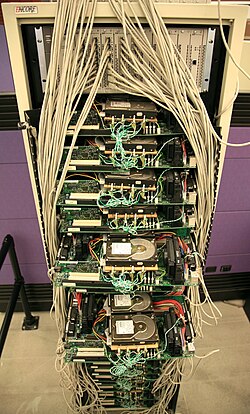
There are a few principles which allowed the web, as a platform, to support such growth. By design, the Web is universal, royalty-free, open and decentralised. Thousands of people worked together to build the early Web in an amazing, non-national spirit of collaboration; tens of thousands more invented the applications and services that make it so useful to us today, and there is still room for each one of us to create new things on and through the Web. This is for everyone." - http://www.webat25.org/ (in image: The first web server, used by Tim Berners-Lee. Photo via Wikipedia).

Ref.: Google, Official Blog, On the 25th anniversary of the web, let’s keep it free and open - http://googleblog.blogspot.ro
- Los Angeles Times, Salvador Rodriguez, World Wide Web proposal was submitted 25 years ago today - http://www.latimes.com/

(In Romanian)
De-a lungul vremii, în toate domeniile ştiinţifice se schimbă teoriile, metodele şi tehnicile de investigaţie, de aceea dinamica cunoaşterii umane influenţează dezvoltarea generală a societăţii umane. Pentru a obţine evoluţie şi eficienţă în viaţa sa, omul trebuie să se adapteze continuu la aceste schimbări ale cunoaşterii. În domeniul educaţiei, şi în special al învăţării şi al perfecţionării, apariţia de noi tehnologii ale informaţiei şi comunicării (TIC), îmbunătăţirea teoriilor pedagogice şi psihologice, obligă pe elevi/studenţi, profesori, părinţi şi pe specialişti, să se adapteze la aceste schimbări. (in image: Google's First Server, 1998)

1990 vs. 2014, NU existau, dar astăzi există: www, web technologies, web programming, web server, router, proxy, spider,e-mail, HTML, XML, PHP, URL, My SQL, DNS, DHCP, cookie, .com, .edu, .ro, .eu, link, Google, Facebook, Yahoo, Mozilla, Chrome, chat, skype, Yahoo!, messenger, twitter, SMS, RSS, BBS, CSS, SSL, SSH, Firewall, Page rank algorithm, e-learning, Web 2.0, Learning 2.0, Tools 2.0 (Google drive, wikis, social networks), educational software, virtual learning, e-commerce, e-training, e-portfolios, e-rubrics, iPhone, iPad, SmartPhone, Tablet PC, Android OS, Blackberry, Cloud computing, Touch technology, interactive table, digital blackboard, online journal, online courses, digital library, Dropbox, Nong, Google groups, open source, PDF, CMS, LMS, Flash, Dreamweaver, Photoshop, Podcast, Moodle, Drupal, Joomla!,Wikipedia, wiki, blog, Java, JavaScript, Windows OS, Linux, Azure platform.

Wednesday, December 19, 2012

Informatică aplicată

În luna ianuarie 2013, la Editura Universităţii din Bucureşti va apărea INFORMATICĂ APLICATĂ. Modele de aproximare, software şi aplicaţii.
Cartea destinată studenţilor de la "Ştiinţe" nu este un curs de Matematică,  de Statistică sau de Analiză numerică, şi nici curs de Chimie, Fizică sau Biologie. Conţinutul şi competenţele urmărite a fi căpătate trebuie să-i ajute pe studenţi să înţeleagă conţinutul celorlalte cursuri din programul de studii pentru "Ştiinţe". Astfel, vor avea posibilitatea să înţeleagă diverse calcule matematice, calcule statistice, calcule numerice sau analiza datelor experimentale  prin utilizarea calculatorului, a sistemelor software moderne, a tehnologiilor Web şi a sistemului Internet, şi în general prin utilizarea TIC (Tehnologiile Informaţiei şi Comunicaţiei; ICT- Information and Communication Technologies).
„Computer Science” (Ştiinţa calculului) şi „Informatics” (Informatică) au fost considerate concepte identice. Astăzi, termenii sunt diferiţi. Publicul larg confundă uneori Computer Science cu Informatics sau Information Technology (IT) / Tehnologia Informaţiei (IT). Utilizarea sistemelor de calcul  (prelucrarea informaţiilor şi prelucrarea de cunoştinţe – Inteligenţa Artificială) a schimbat lumea şi continuă să influenţeze aproape fiecare aspect al vieţii noastre, inclusiv în medicină şi asistenţă medicală, în afaceri şi finanţe, în educaţie şi formare continuă, în ştiinţă şi tehnologie, în politică şi guvernare, în divertisment, etc.

CUPRINS.

1 Generalităţi despre Informatică
   1.1 Impactul calculatorului asupra cunoaşterii
   1.2 Sisteme de calcul şi gândirea algoritmică
   1.3 Componenta hardware
   1.4 Componenta software
   1.5 Componenta Web şi sistemul Internet
   1.6 Componenta de securitate informatică
   1.7 Componenta de aplicaţii şi platforme

2 Teoria erorilor şi modele de aproximare
   2.1 Generalităţi despre erori, incertitudini şi aproximări
   2.2 Cazuri speciale: metode şi algoritmi noi
   2.3 Indicatori statistici
   2.4 Distribuţia, propagarea şi estimarea erorilor
   2.5 Analiza datelor experimentale. Modele matematice
   2.6 Modele liniare. Regresia liniară
   2.7 Exemple şi aplicaţii practice

3 Modele de aproximare neliniare
   3.1 Puncte de extrem ale funcţiilor reale
   3.2 Aplicaţii şi suport software
   3.3 Modelul matematic al regresiei neliniare
   3.4 Modelul logaritmic
   3.5 Modelul exponenţial
   3.6 Modele neliniare în Farmacocinetică

4 Conceperea şi elaborarea lucrărilor ştiinţifice
   4.1 Motodologia elaborării şi editării lucrărilor ştiinţifice
   4.2 Editarea formulelor matematice    
   4.3 Editarea structurilor chimice
   4.4 Teorema lui Green şi aria unui poligon oarecare
   4.5 Tehnologii e-Learning şi software educaţional
   
5 Aplicatii, probleme şi teme pentru Laborator    
   5.1 Determinarea modelelor liniare şi neliniare
   5.2 Parametrizarea şi rezolvarea problemelor
   5.3 Teme pentru Laborator

Wednesday, September 26, 2012

Higher Education Qualifications

National Higher Education Qualifications Registry: http://www.rncis.ro/

"Registrul Naţional al Calificărilor din Invătamântul Superior - RNCIS - este o aplicaţie informatică organizată sub forma unei baze de date naţionale ce va cuprinde toate calificările acordate de instituţiile de invăţământ superior din România, constituind un instrument de lucru pentru universităţi, studenţi, parteneri sociali."

- HOTĂRÂRE privind denumirile calificărilor şi titlurile conferite absolvenţilor învăţământului universitar de licenţă, precum şi echivalarea unor calificări: http://www.edu.ro/

Souce: http://www.rncis.ro/

Thursday, August 30, 2012

CreatiVE - Virtual Heritage Edition


The first Romanian Summer School on Virtual Environments - http://creative.cerva.ro/

CreatiVE - Prima Școală de Vară de Medii Virtuale din România - "Virtual Heritage Edition": 30.08 - 10.09, 2012.

Şcoala de vară creatiVE (se desfăşoară în cadrul Universităţii Ovidius Constanţa) "își propune să iniţieze şi specializeze studenţii în reconstituirea virtuală 3D a vestigiilor istorice într-un cadru competitiv şi colaborativ deopotrivă, prin intermediul unei experienţe multi-culturale, ce depăşeşte barierele academice şi prinde rădăcini adânci prin explorarea şi depăşirea limitelor echipelor participante." Activitățile școlii de vară creatiVE se vor concentra pe sesiuni teoretice, conduse de specialişti invitaţi din ţară (Cluj şi Iaşi) şi din străinătate (Franţa şi Olanda), precum si pe sesiuni practice.

Ref.: Proiectul creatiVE:  http://creative.cerva.ro/ , http://www.agora.ro/stire/scoala-de-vara-creative , http://en.wikipedia.org/wiki/Tropaeum_Traiani

Thursday, July 5, 2012

The Higgs boson: July 4, 2012

The physicist Peter Higgs came up with a possible explanation in the 1960s, which predicts the existence of the particle that now carries his name. Finding the Higgs boson is one of the primary aims of the Large Hadron Collider, a 27km long ring-shaped tunnel in which protons are made to collide at extremely high energies. The idea is that these particle collisions would produce the Higgs boson, if it does exist.
  • Today's evidence shows that a new particle has indeed been discovered, but physicists won't rest easily until more analysis has confirmed it as the Higgs boson described by Higgs' theory or if it's a new exotic particle. "It's a bit like spotting a familiar face from afar," said CERN Director General Rolf Heuer. - http://plus.maths.org/content/higgs
- "For physicists, this is the equivalent of Columbus discovering America." Prof.  Themis Bowcock
-"This is the physics version of the discovery of DNA. It sets the course for a brand new adventure in our efforts to understand the fabric of our Universe.”  Prof. Sir Peter Knight

- "If there is no fundamental science then there is no basis for applied science. We have to strike a balance. 23 years ago the World Wide Web was born here. It has changed the world dramatically." Rolf Heuer

Ref.: http://www.telegraph.co.uk/science/large-hadron-collider/9374788/Higgs-Boson-announcement-from-Cern-as-it-happened.html

Sunday, June 3, 2012

Siveco – 20 de ani de risc şi viziune

Domenii:
EDUCAŢIE, ÎNVĂŢĂMÂNT, CERCETARE (e-Learning şi Software educational)

... un posibil început: mai 2001

... arhitecţi şi “stâlpi” ai Siveco: Irina Socol, Florin Ilia, Radu Jugureanu, Delia Oprea, Ştefan Morcov, Daniela Vlădoiu, Emil Dragomirescu, Alexandru Coşbuc, ...
  
Valurile performanţei:  
  • Valul I (2001-2007) – SEI şi AeL
  • Valul II (2008-2013) – proiecte europene, AeL si e-learning
  • Valul III (din 2013) – 3D, Multi-Touch, m-Learning

e-Learning = Learning (Detalii: LINK)

"Educaţia asistată de computer permite abordarea sistemică a instruirii, o nouă viziune pe care psiho-pedagogia o teoretizează în ultimii ani, dar care devine operativă în momentul în care strategia didactică se împleteşte cu tehnologiile multimedia. Astfel, dacă în instruirea gândită ca sistem se pot determina: scopul sistemului (obiectivele instruirii), procesele prin care este atins scopul (tipul de activităţi, situaţii de învăţare, la care trebuie să participe elevii pentru a atinge obiectivele fixate) şi rezultatele la care se doreşte să se ajungă (traduse în categorii de achiziţii efective ale elevilor), proiectarea softului educaţional permite chiar acoperirea principalelor elemente constitutive ale sistemului, contribuind la optimizarea procesului de învăţare." Radu Jugureanu şi Delia Oprea

Valul I (2001-2007) – SEI şi AeL  

1. Adlic 2001 - admitere la licee, sistem informatic de repartizare a elevilor în licee
• “În 2001, MEdC a implementat sistemul de repartizare în licee care avea nevoie de un sistem informatic. Ministerul a încercat să facă un sistem cu informaticienii pe care îi avea la dispoziţie. Au avut în mai 2001 o simulare naţională care a eşuat. Noi am fost alternativa pentru această problemă” Florin Ilia.
• “Unul dintre concurenţii noştri a dat o oferta prin care făcea programul într-un an de zile cu un milion de dolari. Atunci noi am făcut o chestie despre care mulţi au spus că este sinucigaşă. Timp de o lună am muncit pe brânci şi a ieşit la termen. Pe gratis. Atunci am răspuns noi, Compaq, HP şi IBM. Ei au pus calculatoarele gratis, cu o garanţie de trei ani, au asigurat conexiunea la Internet iar noi, softul şi am instruit operatorii'” Irina Socol  

2. programul SEI : 2001-2010 - implementarea Sistemului Educaţional Informatizat (SEI): faza I (2001-2002, faza pilot), fazele II si III (2003-2004), faza IV (2005-2010)
• La nivel internaţional, SEI este cel mai cunoscut şi premiat proiect românesc din domeniul educaţiei, primind trofee în cele mai mari competiţii precum World Summit Award, European eGovernment Awards, European IT Excellence Awards, International Project Management Association, eEurope Awards for eGovernment;
• Sistemul Educaţional Informatizat (SEI) din România a fost nominalizat ca exemplu de "Best practice" în Europa, în cadrul competiţiei European eGovernment Awards 2009, organizată de Comisia Europeană;
• 2010 - eLearning Awards.
• “Compania noastra a sustinut permanent promovarea unei educatii moderne si incurajarea elevilor si profesorilor de a se implica direct in dezvoltarea unei societati informationale. Initiativele noastre ajuta elevii, studentii si profesorii sa isi formeze abilitati de lucru in echipa, de planificare si organizare, sa capete experienta practica, tehnica si generala, sa isi construiasca un portofoliu, referinte si rezultate concrete. Sprijinim elevii de azi sa fie deschisi catre mediul de lucru si economic pe care il vor intalni dupa absolvire.” Stefan Morcov

3. AeL eContent si e-Learning - Lectii interactive AeL
• 2005 -World Summit Award, "Cel mai bun conţinut interactiv eContent", recompensat în cadrul World Summit Award (World Summit on the Information Society);
• Gold Winner: E-Learning Awards, 2010 London - Best e-learning project securing widespread adoption, www.elearningage.co.uk
• "Reuşita obţinută în Anglia aparţine unei echipe de AUR. Produsele noastre AeL, AeL eContent, AeL eServices sunt adoptate pe scară largă şi au generat valoare pentru întreaga societate românescă. Ele sunt motorul unor proiecte de imensă popularitate precum Conferinţa Naţională de Învăţământ Virtual, IntelTeach, Cupa SIVECO, Şcoala de Vară SIVECO, Cursurile Caselor Corpului Didactic, forum.edu.ro, pătrunzând în instituţiile de educaţie, generând performanţă exact în zona în care este cel mai eficient asimilată" Radu Jugureanu
• "Este un premiu cu adevărat fantastic, binemeritat, pentru un proiect complex, dificil, care influenţează decisiv procesul educaţional în Romania, Moldova, Cipru, Emiratele Arabe Unite, Maroc. Acesta este de altfel şi explicaţia primirii premiului - nivelul ridicat de asimilare şi răspândire în rândul utilizatorilor direcţi", Florin Ilia


4. Bac (din 2004) – sistemul informatic ale activitatile examenului de bacalaureat - rezultate ale examenului de bacalaureat la nivel national - http://bacalaureat.edu.ro/  

5. Centrul Virtual de Excelenţă • Cupa Siveco (2003-2010), Concurs de Software educational pentru elevi si profesori • concursul “Campionii” concurs de pregătire a elevilor informaticieni, competiţia .Campion, http://campion.edu.ro/ • Concursul Naţional de Informatică "Urmaşii lui Moisil" • Caravana SEI - AeL - proiectul de promovare a Programului guvernamental SEI în cele 1510 liceele, 3228 de şcoli şi 42 de Case ale Corpului Didactic, beneficiare ale laboratoarelor informatizate, ale platformei eLearning AeL şi ale lecţiilor multimedia • Programul Intelteach 2007, program de perfectionare a profesorilor in utilizarea TIC pentu predare si invatare • sustinerea proiectelor educationale CNIV si ICVL (din 2003, respectiv din 2006) • sustinerea manifestarii stiintifice eLSE (din 2005)

Valul II (2008-2013)- proiecte europene, AeL si e-learning
• proiecte europene (export 40%), sisteme informatice si solutii de e-Learnig in diverse tari
• Emiratele Arabe Unite - Portal Educaţional Naţional şi conţinut educaţional interactiv în limba arabă şi engleză • Cipru - Platformă integrată de eLearning conţinut educaţional interactiv în limba greacă • Azerbaidjan - soluţie integrată de eLearning pentru managementul sistemului educaţional naţional • Republica Moldova - platformă integrată de eLearning şi conţinut educaţional
• initiativa eduVision 2020, Shaping the future of e-Learning - http://eduvision.ro/ 


Valul III ( din 2013) - 3D, Multi-Touch, m-Learning
• sisteme Multi-Touch, • Augumented Reality, • Transdisciplinarity, • sisteme m-Learning

Thursday, May 31, 2012

World IPv6 Launch

World IPv6 Launch represents a major milestone in the global deployment of IPv6 (the successor to the current Internet Protocol, IPv4).
 Major Internet service providers (ISPs), home networking equipment manufacturers, and web companies around the world are coming together to permanently enable IPv6 for their products and services by 6 June 2012.
- http://www.worldipv6launch.org/
- http://www.internetsociety.org/

Tuesday, February 14, 2012

Software Engineering

Guidelines Based Software Engineering for Developing Software Components by Muthu Ramachandran (Journal of Software Engineering and Applications, 2012, 5, 1-6)

The term Software Engineering was coined by F. L. Bauer the chairman of 1968 NATO Software Engineer- ing conference held in Garmisch, Germany to promote a disciplined approach to developing software. The term Software is meant a list of machine instructions where as the Engineering is meant the use of disciplined appro- aches and laws when building software systems.
Software guidelines have been with us in many forms within Software Engineering community such as knowledge, ex-periences, domain expertise, laws, software design principles, rules, design heuristics, hypothesis, experimental results, programming rules, best practices, observations, skills, algorithms have played major role in software development.
In Software Design we use guidelines that help us to identify a suitable design criterion when faced with design decisions. Therefore software guidelines summarises expert knowledge as a collection of design judgements, rationales, and principles. This can be used by students/ engineers when learning about new principles with ex-amples and experts alike.

Source: http://www.SciRP.org/journal/jsea

Wednesday, February 8, 2012

List of SOC Occupations (USA)

2010 SOC System: Contains links to major groups, the complete hierarchical structure, broad occupational definitions, and detailed occupational definitions.
Source: U.S. Bureau of Labor Statistics,
http://www.bls.gov/soc/classification.htm

Thursday, November 24, 2011

Mathematics in Movies

Mathematics in Movies: Prof. Oliver Knill, Department of Mathematics Harvard University.
-Ref.: www.math.harvard.edu/~knill/mathmovies/

"During the years, I developed also a passion for mathematical problems in computer science especially for various inverse problems, whether it is in analysis, geometry or cryptology. Inverse problems in computer vision are currently at the top my list. Here is some work done in the Summer of 2007 with Jose Ramirez which continued with a award winning master thesis of Jose at the extension school. Elizabeth Slavkovsky currently writes a thesis on 3D printing in education." Oliver Knill
- Ref.: www.math.harvard.edu/~knill/math/

Wednesday, November 16, 2011

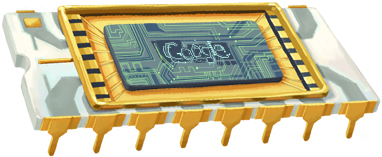
Invention of the microprocessor


1959 - invention of the integrated circuit: co-inventor Robert Noyce of Intel (UpDate: la 12 oct. 2011 Google a sarbatorit 84 de ani de la nasterea lui Robert Noyce)
1971 - invention of the microprocessor (4004): Ted Hoff, Federico Faggin, Stanley Mazor of Intel and Masatoshi Shima of Busicom.

Ref.: http://www.agora.ro

Saturday, November 5, 2011

Ladislau Szilagyi


Ladislau Szilagyi (studied Computer Science at the University of Bucharest, Faculty of Mathematics and Computer Science; graduate in 1978-Informatics), expert of the Software Testing at European Quality Software Trainings (EuroQST)

Ladislau Szilagyi, owner of the EuroQST software training company, has over 30 years experience in IT as a programmer, business analyst, project manager, tester and consultant. He published articles in several software magazines (Testing Experience, Quality Matters, Core), and is a frequent speaker at software testing conferences as SEETEST, Testwarez, CzechTest. He is also an experienced software testing trainer in Romania, helping over 500 testers from Romania to pass the ISTQB foundation or advanced certification. He is the first East-European to obtain the Certified Agile Testing certification as both tester and test trainer. His current focus is on agile testing and he actively collaborates with the Romanian testing community to raise the awareness about the new challenges facing the testers in agile projects.

Ref.: http://www.agile-tester.org/
- http://www.agiletestingdays.com
- Ambassadors of the Agile Testing Days: www.agiletestingdays.com/ambassadors.php (14 - 17 November 2011: Agile Testing Days - Potsdam, Germany)

NOTE: EuroQST offers the following training courses and exams in Europe:
- Certified Agile Tester (CAT / ISQI): www.agile-tester.org/
- Certified Professional for Requirements Engineering (CPRE / IREB): www.certified-re.org/


Thursday, August 11, 2011

Professor Peter J. Denning


Peter J. Denning is best known for pioneering work in virtual memory. He was a pioneer in the development of principles for operating systems and contributed the memory management methods used in all operating systems. Known for Virtual Memory, Working Set, Principle of locality.
• He made substantial contributions to performance evaluation when that industry was getting launched. Denning has been a major influence in computing education.
• In 1999, he expanded the search for fundamental principles to cover all of computing. The discovery of natural information processes in biology, physics, economics, materials, and other fields convinced him that the basic definitions of computation had to be modified to encompass natural information processes as well as artificial.
• In 2007 ACM gave him a special award for 40 years of continuous volunteer service and the NSF gave him one of two national Distinguished Education Fellow awards.

Learning from failures?
"The key idea is not failure, but learning. The process of embracing uncertainty and adventuring in the mysteries of the world is a learning process. We cannot learn if we do not try. When something we try fails, we seek to understand what made it fail and modify our future behavior when we try again. I don't see learning from failures to be a prediction method, but a practice for blending with the unfolding world.", Peter_J._Denning, An Interview with Peter Denning the end of the future by Brian Branagan, Ubiquity ACM, may 2011

Note: Ubiquity is publication of ACM, Peter J. Denning - Editor-in-Chief; Ubiquity is ACM's peer-reviewed Web-based magazine devoted to the future of computing and the people who are creating it.

Ref.:
- http://innovators-way.com/authors/
- http://en.wikipedia.org/wiki/Peter_J._Denning
- http://ubiquity.acm.org/article.cfm?id=1979464
- http://www.youtube.com/watch?v=5a_pO3NYJl0